The short answer
Condo and high-rise moves in South Florida run on the building's rules, not the mover's calendar. Before you pick a date, get the building's move policy in writing: the certificate of insurance (COI) it wants, how to book the freight elevator, the hours you can move, any deposit or fee, and where the truck can park. Then book your mover inside that window, not the other way round.
Key takeaways
- Ask management or the HOA for the written move policy before you choose a date.
- The building tells you what the COI must say; your mover's insurance company issues it.
- Reserve the freight elevator and the loading area for the same time slot.
- Plan the crew's work to fit inside the move window, with a buffer.
- Check where the truck parks and how far it is from the dock to the elevator.
Start with the building, not the truck
Every condo association and rental tower writes its own move rules, and they change. Nobody can tell you what yours says except your property manager, front desk or HOA. So the first call isn't to a mover. It's to the management office, with one question: "Can you send me your move-in and move-out requirements?"
What you want back, ideally on paper or by email:
- The move form or registration the building wants filled in
- The certificate of insurance (COI) requirements, word for word
- How to reserve the freight or service elevator, and for how long
- The days and hours moves are allowed
- Any move fee or refundable deposit, and how it's paid
- Where the truck can park or load, and any height or time limits
Moving between two managed buildings? You need all of this from both of them. Their rules won't match, and the tighter one decides your day.
The certificate of insurance (COI), in plain English
A COI is a one-page document from the mover's insurance company that proves the mover carries insurance. Buildings ask for it so that if a wall, elevator or lobby floor gets damaged, there's a policy to go to. The building usually wants to be listed on the certificate by its exact legal name, and some ask for specific coverage amounts or extra wording.
The trick is simple: don't paraphrase. Ask management for its COI requirements or sample certificate and forward it to your mover exactly as written. If you're moving with Flex Moving, send us the building's requirements or the property manager's email and we'll have the certificate sent before moving day. Do it as soon as you have a date, because many buildings want to review the COI before they confirm the elevator.
While you're at it, check the mover itself. Florida requires movers doing moves within the state to register with the Florida Department of Agriculture and Consumer Services (FDACS), and registration includes proof of insurance (Fla. Stat. § 507.03). Ask any mover for its registration number, and you can check it with FDACS at 1-800-HELP-FLA.
Freight elevator reservations and move windows
Most towers let you reserve the service elevator for a block of time, and that block is your move window. Weekends, month-ends and the first of the month go fast, so reserve the elevator the same day you lock in the mover. Ask whether the elevator gets padded, whether someone from the building has to run it, and what happens if the move runs long.
Then measure. The freight elevator door and cab decide what fits, not your living room. Tall headboards, sectional pieces and big mirrors are the usual suspects. If something won't fit standing up, it may need to come apart, and that's much easier to plan on Tuesday than to discover on Saturday at the elevator door.
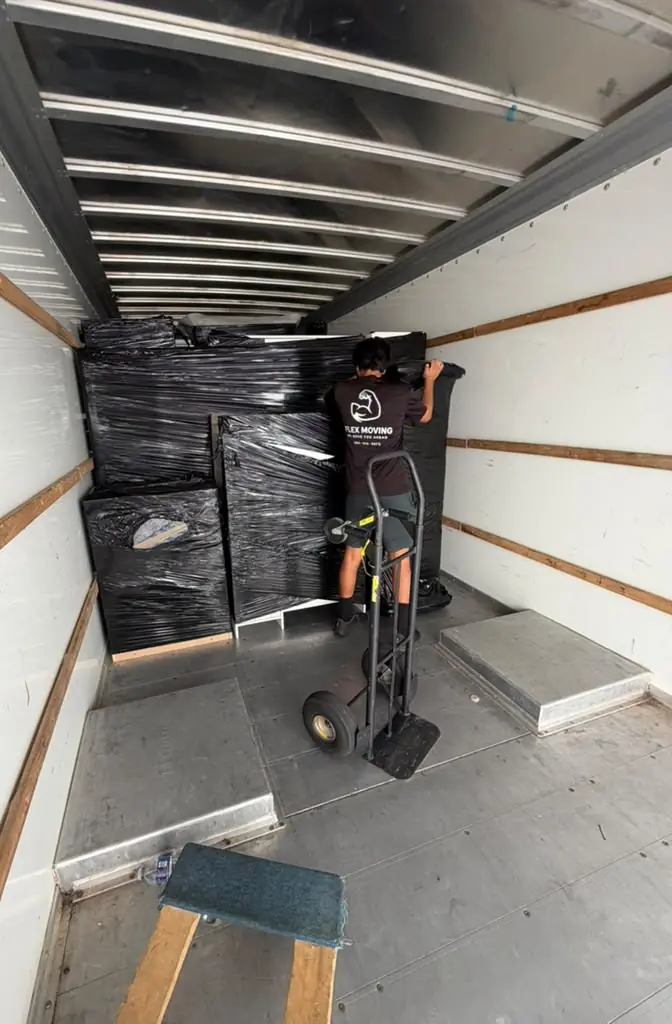
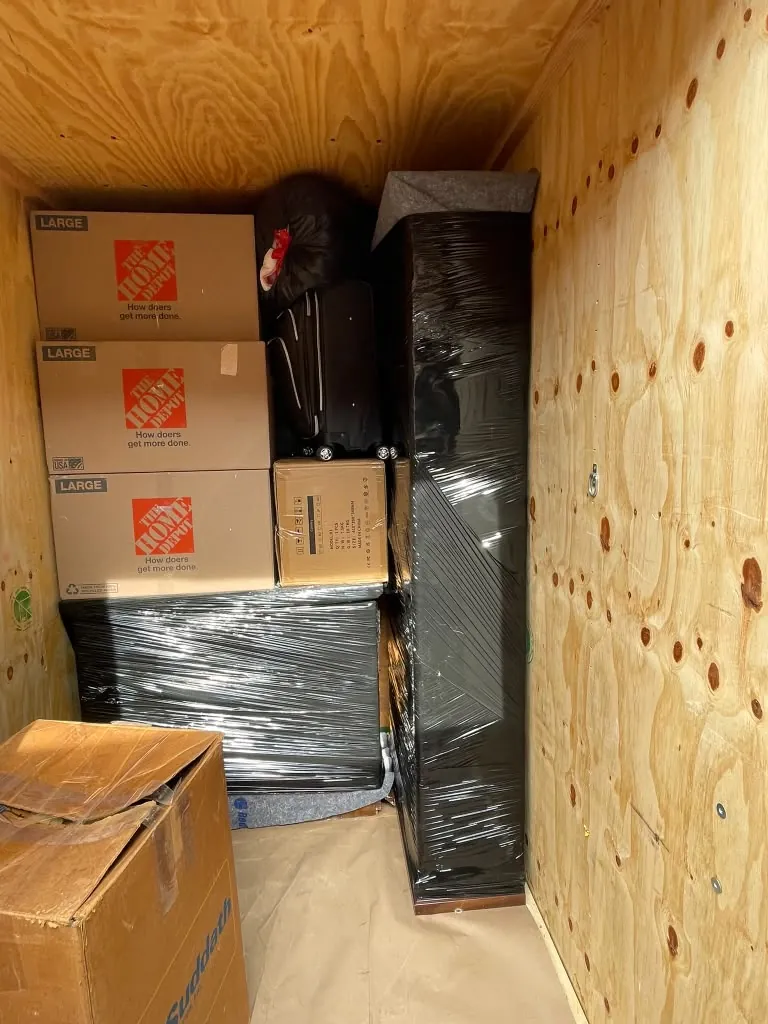
To fit a tight window, get the slow work done before the crew arrives: everything packed and taped, beds and tables taken apart (or ask the crew to do it), and a clear path from the door to the elevator. Our packing service can handle the boxes if your week is already full.
Deposits, fees and damage walk-throughs
Some buildings charge a move fee, some hold a refundable damage deposit, some do both, and some do neither. Ask the amount, how to pay it, and when and how a deposit comes back. Don't guess from what your friend's building charged.
If there's a deposit, ask for a walk-through of the hallway, elevator and lobby with someone from management before and after the move, and take dated photos of any existing scuffs. A good crew protects floors and door frames and pads the elevator if the building doesn't, but photos settle arguments faster than anyone's memory.
Loading docks, parking and the truck
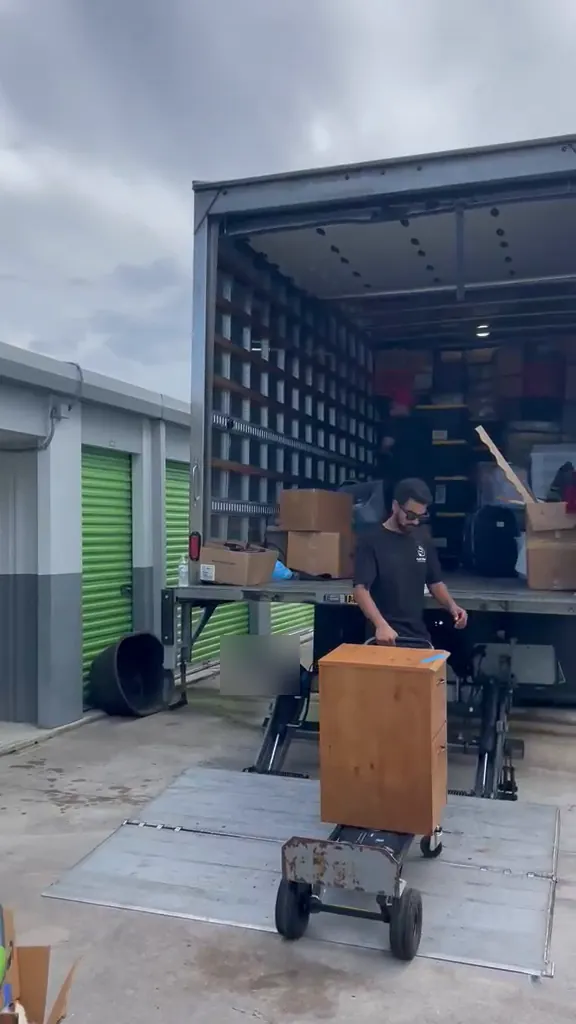
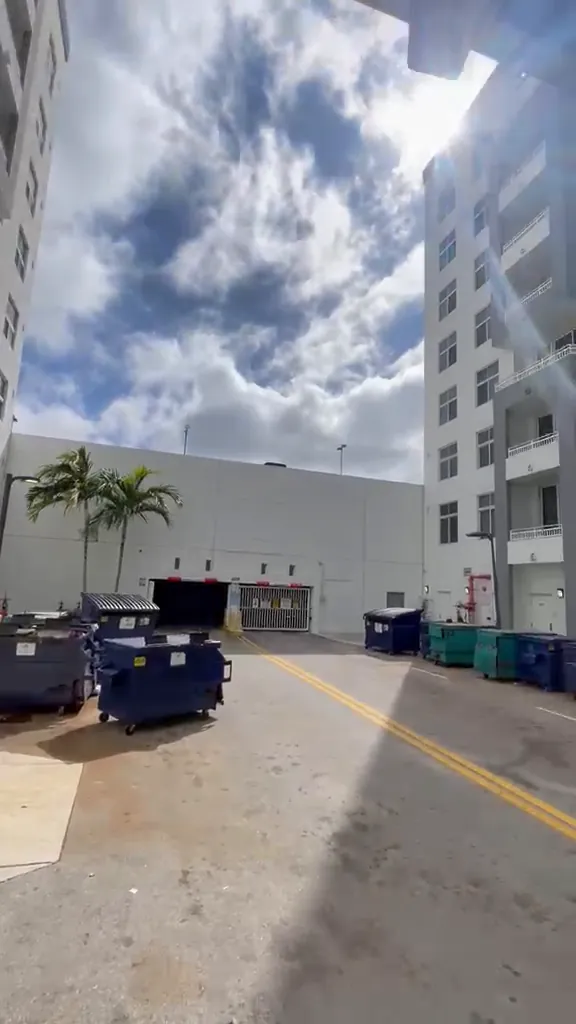
Find out exactly where the truck goes. A loading dock or service drive is ideal. A garage usually isn't, because moving trucks are often taller than the clearance. Ask about time limits at the dock, whether it's shared with trash pickup or deliveries, and how far it is from the dock to the freight elevator, since a long carry adds time to every trip.
If the truck has to use the street, ask the building, and if needed the city, whether a permit or reserved space is required. Then send all of it (address, dock location, gate codes, the manager's phone number) to your mover a few days ahead. Moving within Miami or Fort Lauderdale? Our city pages cover the local quirks we see most.
Your condo move checklist
Print it, screenshot it or stick it on the fridge. Every item ends the same way: confirm it with your building or HOA.
Tick the boxes as you go (or print this page).
As soon as you have a date
- Ask management for the written move policy (both buildings, if moving condo to condo)
- Reserve the freight elevator and the loading area for the same window
- Book your mover for that window and send them the building's COI requirements
- Ask about move fees and deposits, and how they're paid
The week before
- Confirm the building received and approved the COI
- Measure the elevator door and cab against your largest pieces
- Send the mover the address, dock location, gate codes and manager's contact
- Finish packing; label boxes by room
Moving day
- Walk the hallway and elevator with management; take photos
- Meet the crew at the dock and show them the route to your unit
- Keep keys, fobs, documents and medication with you, not in the truck
- Do a last walk-through of the empty unit before the window closes
Questions people ask
Who asks for the certificate of insurance, me or the mover?
You get the requirements from your building, and your mover's insurance company issues the certificate. Forward the building's requirements to the mover exactly as written. With Flex Moving, send us the requirements or the property manager's email and we have the certificate sent before moving day.
How far ahead should I reserve the freight elevator?
As soon as you have a moving date. Weekends and the end and start of the month book up first, and some buildings won't confirm the elevator until they've approved the COI, so leave time for that too.
Do I need a COI for both buildings?
If both are managed buildings with move rules, each one will usually want its own certificate with its own name on it. Ask both management offices; it's one email each and saves a lot of stress on the day.
Can the moving truck park in the condo garage?
Usually not, because moving trucks are often taller than garage clearance. Ask management where trucks load, whether there's a time limit, and how far the dock is from the freight elevator.
What happens if the move runs past the building's window?
It depends on the building. Some allow extra time for a fee, some stop the move. Ask in advance, pack before the crew arrives, and book a window with some buffer so you're not racing the clock.
Want us to handle the building part?
Send us your move date and your building's requirements, and we'll plan the crew, the truck and the certificate around your window.