The short answer
Load heavy and tall things first, tight against the front wall, then build floor-to-ceiling tiers toward the door, wrapping every piece and strapping each tier before you start the next. Keep the weight low and even from side to side, fill every gap, and put the things you'll need first in last.
Key takeaways
- Heavy and tall pieces go first, against the wall farthest from the door.
- Build the load in tight tiers that run floor to ceiling and wall to wall.
- Wrap everything that can scratch or be scratched; wood never touches wood.
- Strap or brace each tier before starting the next one.
- Keep weight low and balanced left to right; the essentials go in last.
Before you load: measure, prep and gather supplies
Containers and rental trucks come in different sizes and have different weight limits, and the company you rent from publishes both. Check them before moving day, along with their list of items you can't load. If your home won't fit in one container, you want to know now, not with a sofa still on the driveway.
Then get the house ready to load:
- Take beds, tables and desks apart; tape the hardware in a labeled bag to the piece it came from
- Pack boxes full and heavy-at-the-bottom; half-empty boxes crush when stacked
- Use a few standard box sizes so they stack like bricks
- Have moving blankets, stretch wrap, tape and straps ready before the first piece goes in
Rule 1: heavy and tall go first, against the front wall
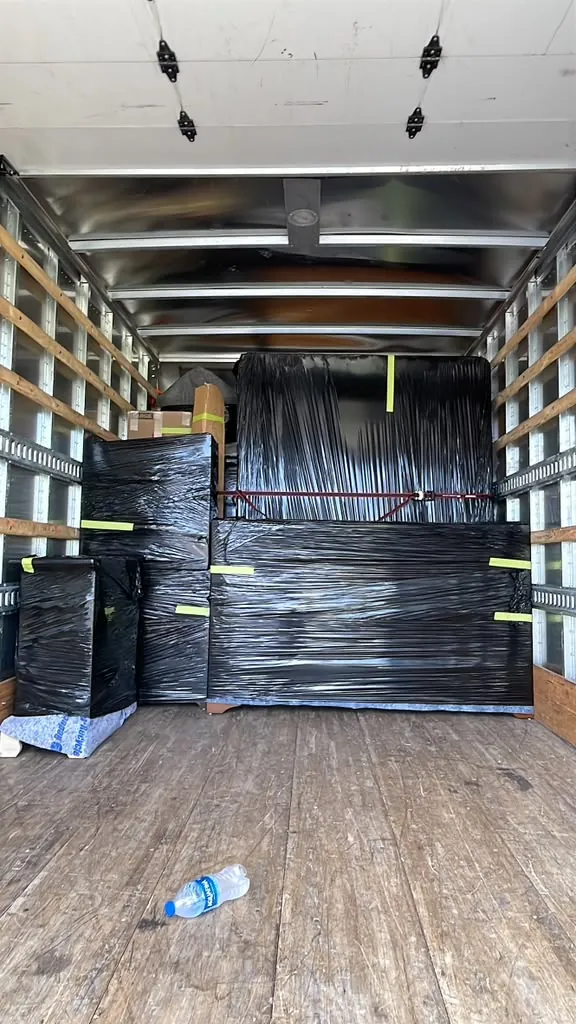
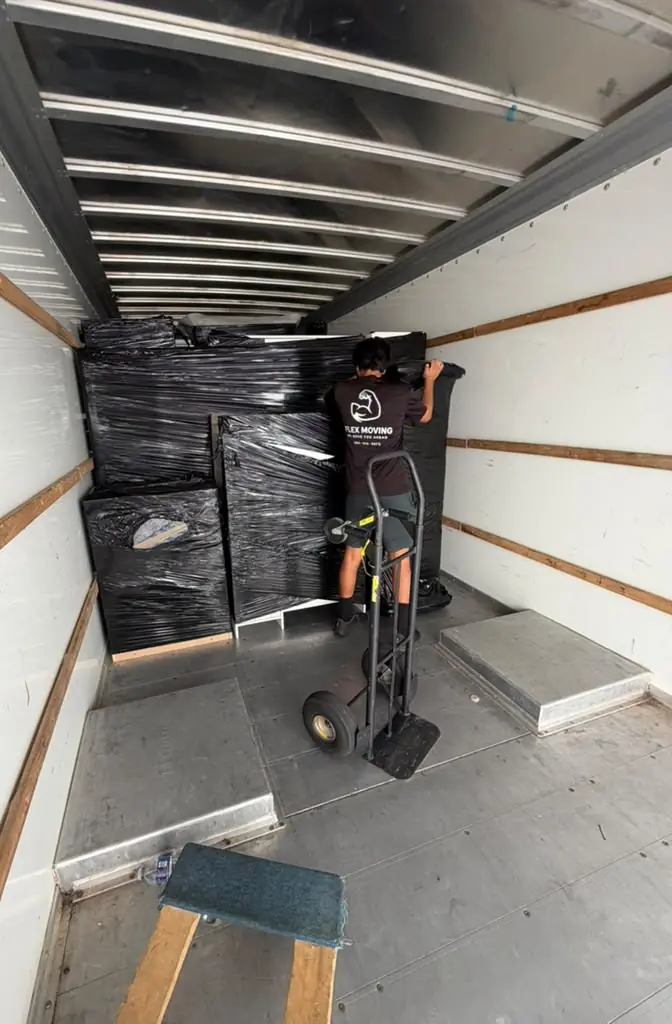
The front wall is the one farthest from the door; in a truck, it's the wall behind the cab. Start there with the heaviest, tallest pieces: refrigerator, washer and dryer, dressers, bookcases, tall cabinets. Stand mattresses and box springs on edge along the side walls, in a mattress bag or wrapped, where they act as a cushion for everything next to them.
Heavy things at the bottom and at the front give the whole load a solid base to lean on. Put them in last and they'll be the ones sliding forward every time the driver brakes.
Rule 2: build tight tiers, floor to ceiling
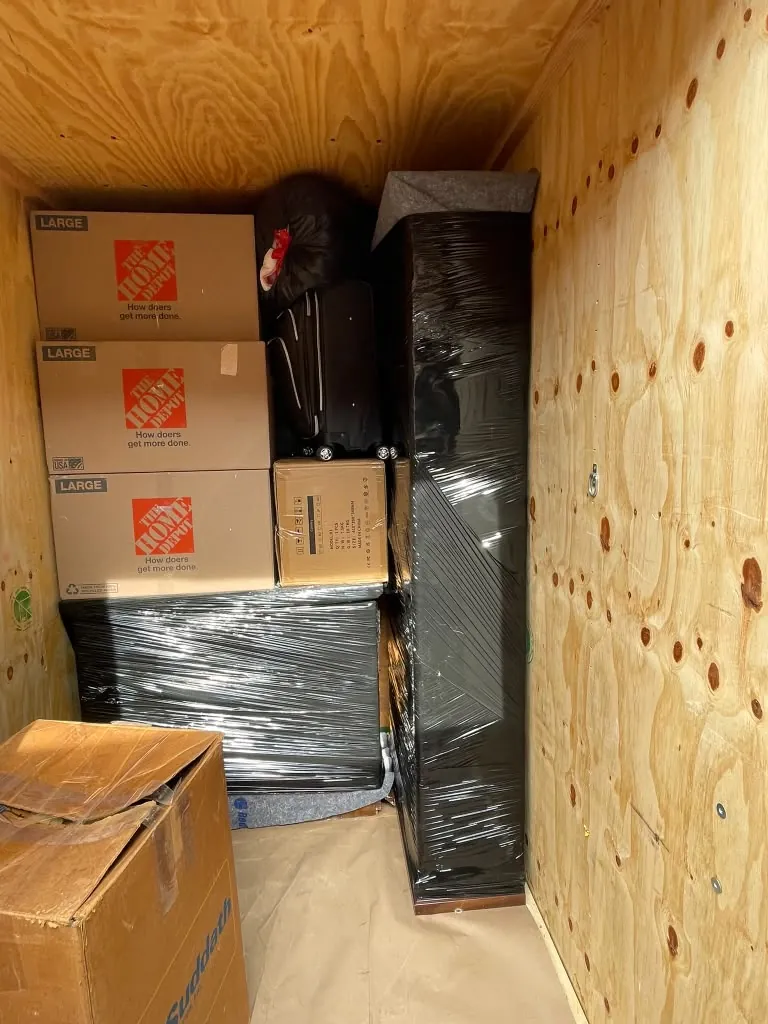
A tier is one "wall" of stuff across the full width of the container. Build it from the floor up: heavy boxes and solid furniture at the bottom, lighter boxes above, the lightest on top, all the way to the ceiling. Only when a tier is full and tight do you start the next one in front of it.
Gaps are where damage happens. Anything with room to move will move, and it'll take its neighbors with it. Fill the holes with soft things like pillows, bagged linens, cushions and rolled rugs. A simple test: if you can still see daylight between two things, something soft goes there. One of our customers called it loading "like adult Tetris experts", and honestly, that's the job.
Rule 3: wrap everything that can scratch or be scratched
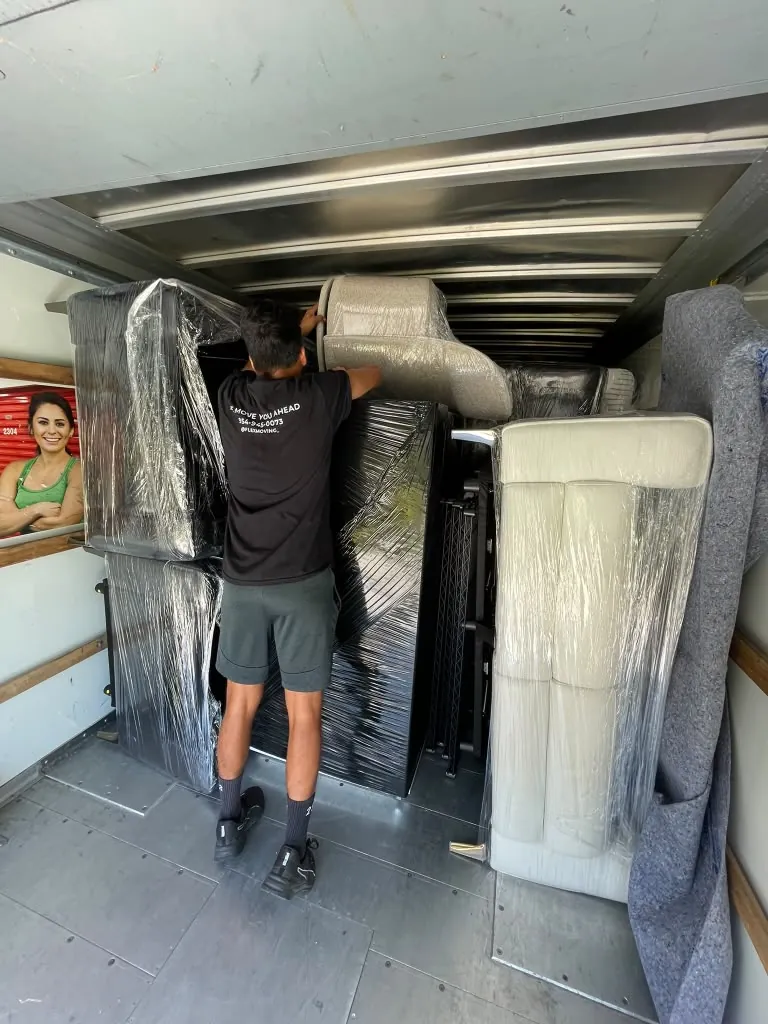
Every piece of wood, metal or upholstery gets a moving blanket, held on with stretch wrap. Stretch wrap alone on a polished table isn't enough; it keeps the blanket in place, but the blanket is what stops the scratch. Pay extra attention to corners, legs and glass.
- Mirrors, framed art and TVs travel on edge, never flat, ideally between two mattresses
- Table legs come off when they can; when they can't, wrap each leg
- Upholstered pieces get covered so they don't pick up dirt or rub against boxes
- Nothing heavy goes on top of anything with glass
Rule 4: strap each tier before you start the next
Once a tier is built, tie it off. Run a strap across it and fasten it to the rails, tie-down rings or load bars your container or truck has (they vary, so check yours). A strapped tier stays a solid block; an unstrapped one slowly leans into the empty space as the load settles on the road. That's how the top boxes end up on the floor by the time you open the door.
Rule 5: balance the weight
Spread heavy items evenly between the left and right sides and keep them low. A lopsided load leans in every turn, stresses the straps, and can make a truck harder to drive. If your appliances all ended up on one side, balance them with heavy boxes or furniture on the other before you build the next tier.
What goes in last
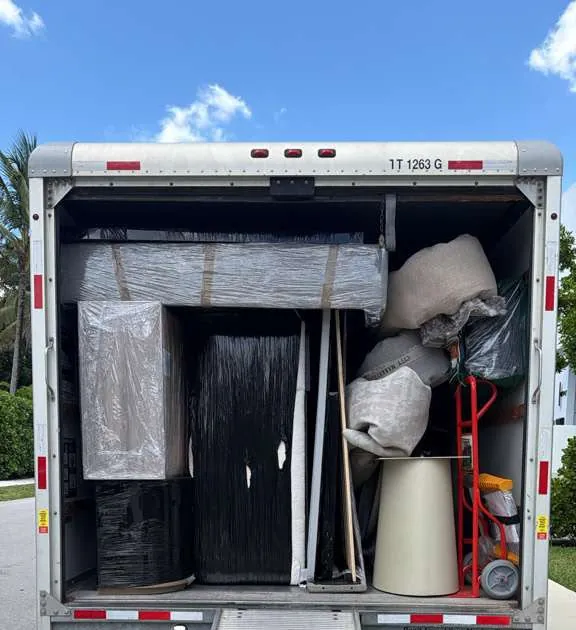
The last tier is what you'll need first: a box with bedding and towels, the shower curtain, toilet paper, chargers, basic tools, the vacuum and cleaning supplies, and anything for kids or pets. Strap that tier too, so it doesn't lean on the door. Your documents, keys, medication and valuables don't go in the container at all; they ride with you.
Loading-day checklist
Tick the boxes as you go (or print this page).
Before the first piece goes in
- Check the container's size, weight limit and prohibited items with the rental company
- Furniture taken apart, hardware bagged and labeled
- Boxes packed full, taped and labeled by room
- Blankets, stretch wrap, tape, straps and a dolly on hand
While loading
- Heavy and tall pieces against the front wall
- Mattresses on edge along the side walls
- Tiers built floor to ceiling, gaps filled with soft items
- Each tier strapped before starting the next
- Weight balanced left and right
Closing up
- Essentials in the last tier, strapped
- Door closes without pushing on the load
- Lock on, and a photo of the finished load for your records
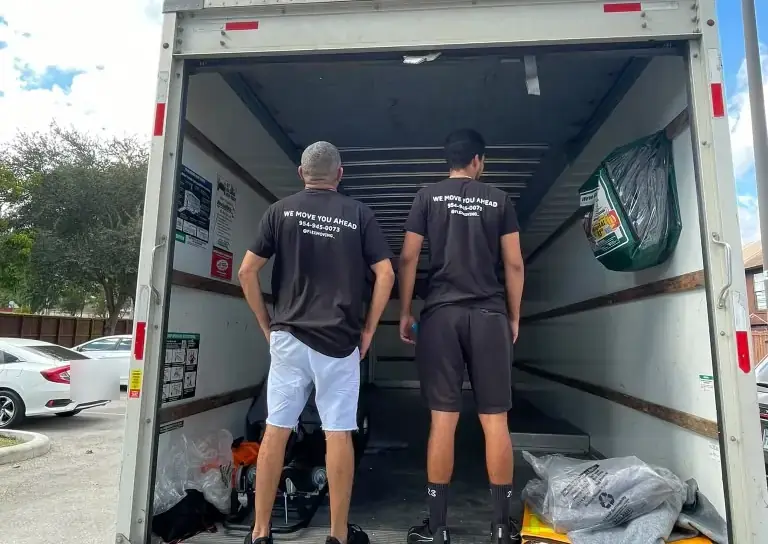
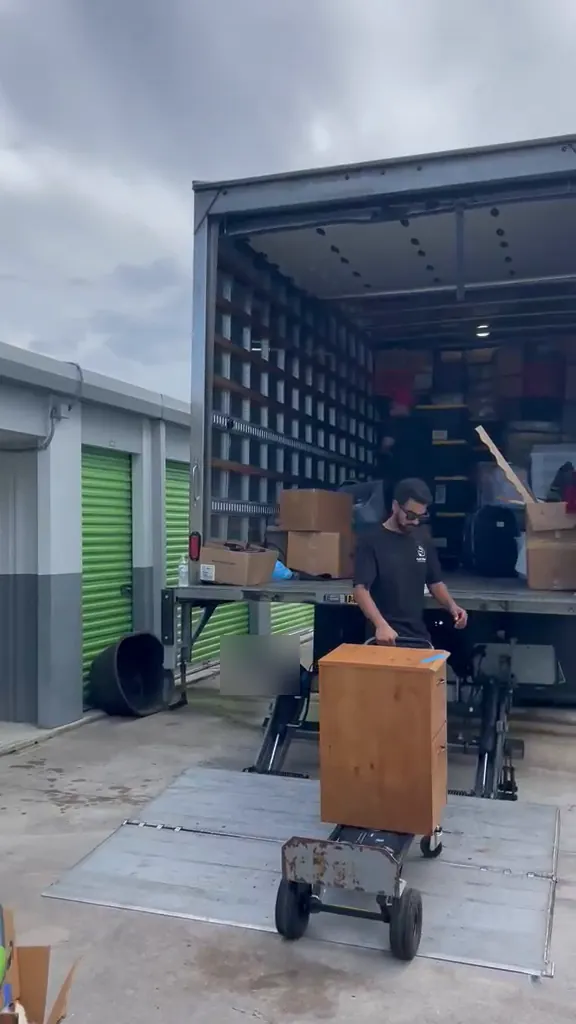
Rather not spend your weekend playing Tetris with a dresser? Our U-Box, PODS and truck loading crew does exactly this: you rent the container or truck, we pad, wrap, stack and strap it. We also unload containers arriving in South Florida, and for a move within Florida we can do the whole thing with our own truck (long-distance moving).
Questions people ask
Should I load boxes or furniture first?
Neither, exactly: load by weight and size. The heaviest, tallest furniture goes against the front wall first, then each tier mixes solid furniture at the bottom with boxes stacked above it, lightest on top.
Can I lay a mattress flat on the floor of the container?
It wastes a lot of floor space and everything ends up stacked on it. Stand mattresses on edge along the side walls, covered in a mattress bag or blanket, where they also cushion the furniture next to them.
What can't I put in a U-Box or PODS container?
Each rental company publishes its own list of prohibited items, and things like flammables, hazardous materials and perishables are commonly on it. Check your company's list before you pack, and keep valuables and documents with you.
How long does it take to load a container?
It depends on how much you have and how ready the house is. Boxes packed, furniture taken apart and a clear path to the container save the most time. Tell us your home size and container type and we'll give you a quote for the crew.
Do you bring blankets and straps?
Yes. Our crew brings moving blankets, shrink wrap, a dolly and straps. If the container comes with load bars or rails, we use those too.
Rented the container? We'll load it.
Tell us the container type and how many, your home size and the delivery date, and we'll schedule the crew for after it arrives.