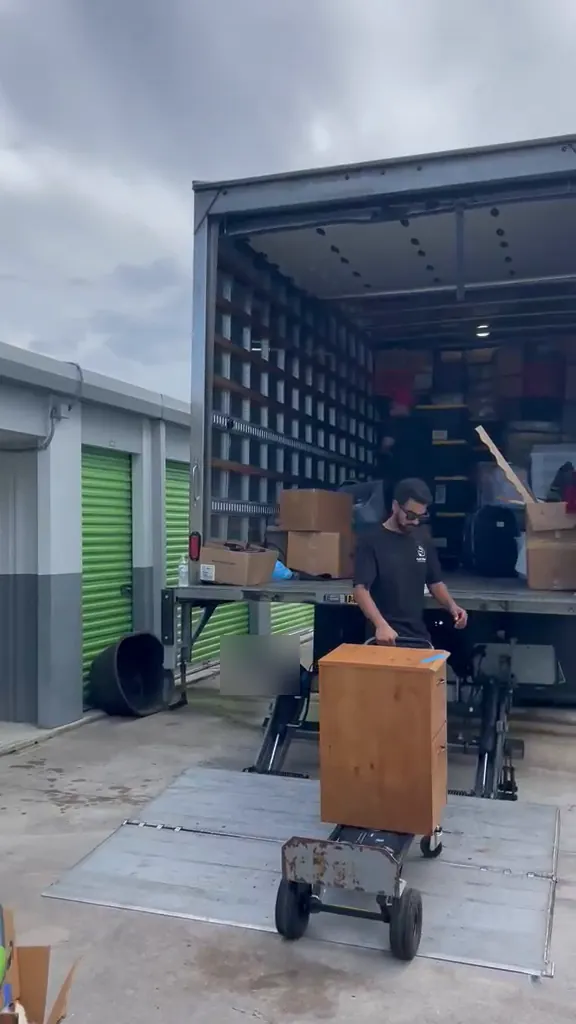
The short answer
A South Florida storage unit has to survive heat, humidity and hurricane season, so pack in lidded plastic totes, keep everything off the floor, and never store anything damp, perishable or flammable. Load the unit with heavy and tall things at the back, an aisle down the middle, and what you'll want first by the door.
Key takeaways
- Ask the facility what its climate control actually controls, and how it handles storms.
- Lidded plastic totes beat cardboard for anything staying more than a few months.
- Everything stored must be clean and fully dry; nothing perishable or flammable.
- Keep things off the floor and a little away from the walls.
- Heavy and tall at the back, an aisle in the middle, the things you need by the door.
Why South Florida is hard on stored things
A closed metal box in the Florida sun gets hot, and our air is wet most of the year. That combination is what warps wood, curls photos, softens cardboard and grows mold. The EPA's advice for homes is to keep indoor humidity below 60 percent, ideally 30 to 50, and to dry anything that gets wet within 24 to 48 hours to prevent mold (EPA). A storage unit nobody opens for months won't do either of those on its own.
Then there's the weather. The Atlantic hurricane season runs from June 1 to November 30, with most activity between mid-August and mid-October (National Hurricane Center). Heavy rain can push water under a ground-floor roll-up door, and a storm can close the facility for a few days right when you need your things.
Before you rent, ask the facility three things: what "climate controlled" means there (temperature only, or humidity too), what happens to access and the units during a storm, and what your rental agreement says about storing items and insurance. Then ask your own insurer whether your homeowners or renters policy covers things kept in storage.
Plastic totes vs cardboard boxes
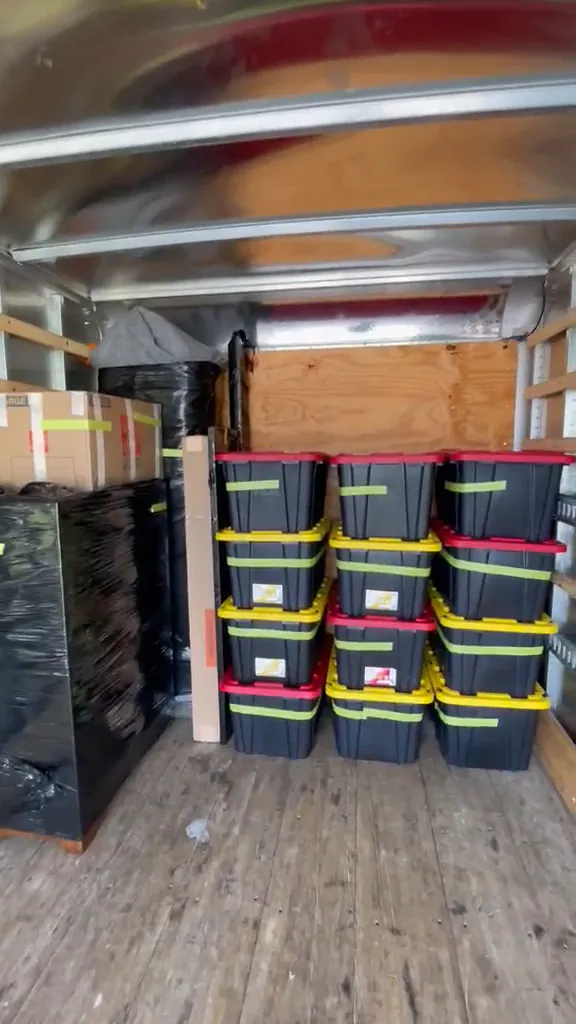
For anything staying more than a few months, lidded plastic totes win. They stack straight, don't go soft in humid air, shrug off a wet floor and are harder for bugs to get into. Cardboard is fine for a short stay in a dry, climate-controlled unit, as long as the boxes are new and strong (not grocery-store boxes that already spent a week in a warehouse).
- Only pack things that are completely clean and dry; a tote with a damp towel inside is a mold kit
- Label every tote or box on two sides, so you can read it from the aisle
- Keep a simple list or photos of what's in each one on your phone
- Fill boxes to the top so they don't crush when stacked
How to prep furniture and appliances
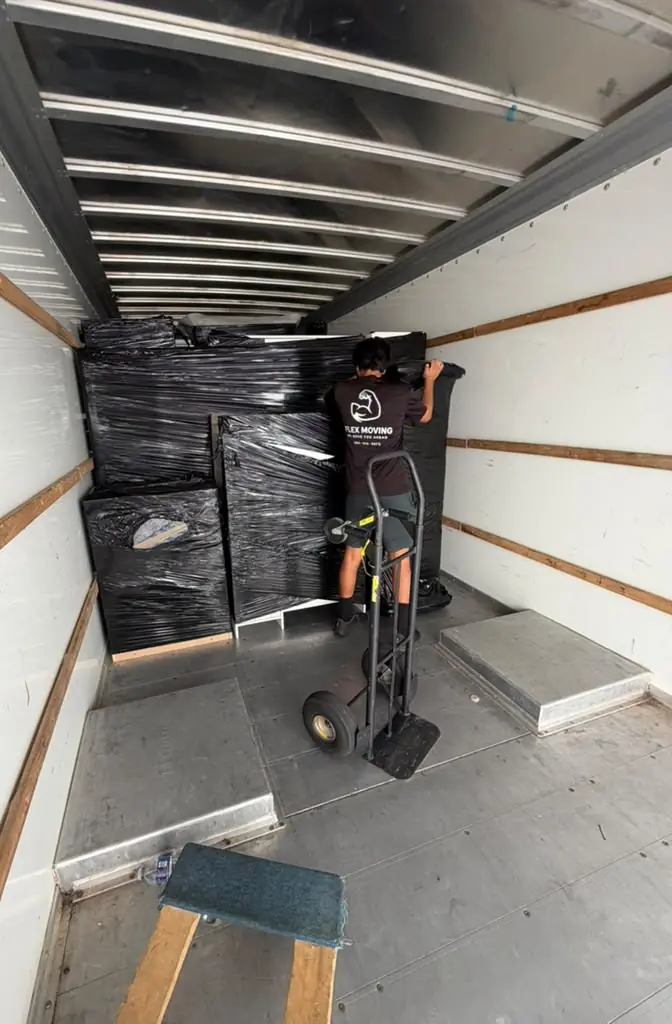
Clean everything first; crumbs and stains invite pests. Defrost and fully dry refrigerators and freezers, and store them with the doors slightly open. Take apart beds and tables and bag the hardware. For a move, we stretch-wrap furniture over blankets so it doesn't scratch in the truck. For months in storage, a breathable cover such as a cotton sheet or moving blanket is kinder to wood and upholstery than plastic wrapped tight, which can trap moisture against the surface.
What not to put in a storage unit
Your rental agreement lists what the facility prohibits, and it's worth actually reading. As a rule of thumb, leave these out:
- Food and anything perishable, including pet food (an open invitation for pests)
- Anything wet or damp
- Gasoline, propane, paint thinner and other flammables; drain the fuel from mowers and generators
- Plants and anything alive
- Important documents, medication, cash, jewelry and irreplaceable photos; keep those with you
Found a pile of things that aren't worth paying rent on? That's what our junk removal is for: paying rent every month on things you don't want rarely makes sense.
How to load the unit
- Put pallets, or at least a plastic sheet, on the floor so nothing sits on the concrete
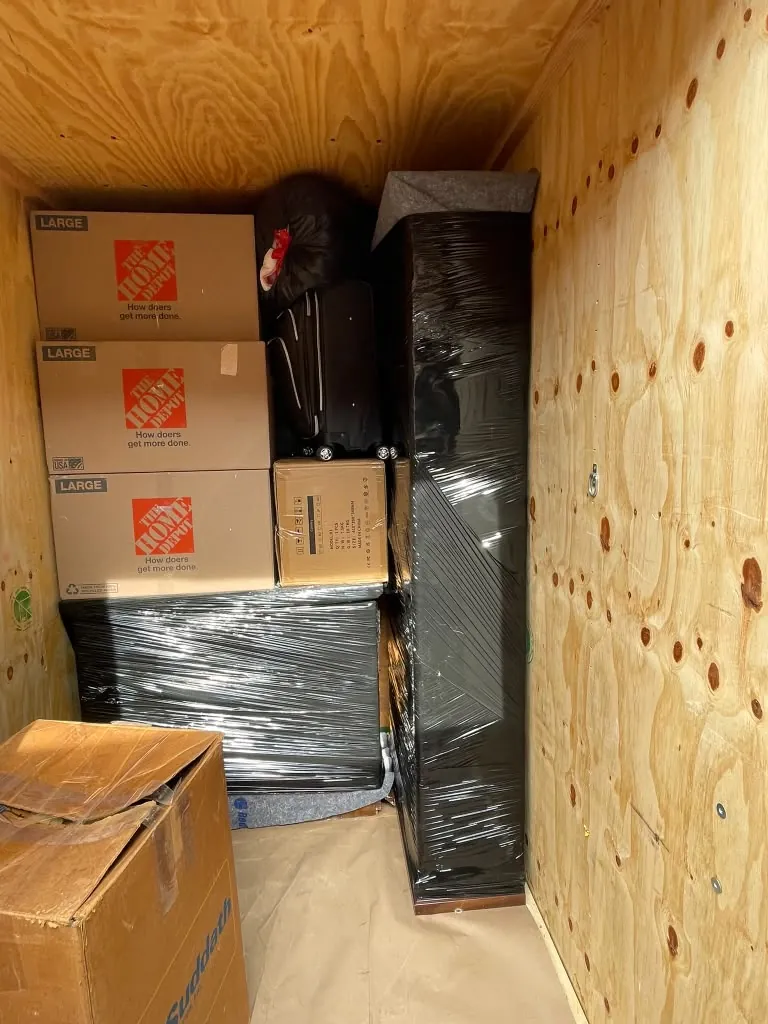
- Heavy and tall pieces go at the back, against the far wall
- Leave a few inches between your things and the walls so air can move
- Keep an aisle down the middle so you can reach the back without unloading everything
- Put the things you'll need during the year closest to the door
- Store sofas flat, not on end, and don't stack heavy boxes on upholstery
- Never lean anything against the roll-up door
The same rules that keep a truck load from shifting apply here: tight, stable stacks with heavy boxes at the bottom. Our guide on loading a U-Box, PODS or truck goes into that in detail.
Moving day, start to finish
A storage move goes fastest when the truck is loaded in the reverse order of the unit plan. What goes to the back of the unit comes off the truck first, so it goes into the truck last. Tell your crew the plan before loading starts; it saves a lot of shuffling at the other end.
- Confirm the facility's access hours and gate code, and whether there's a time limit at the loading area
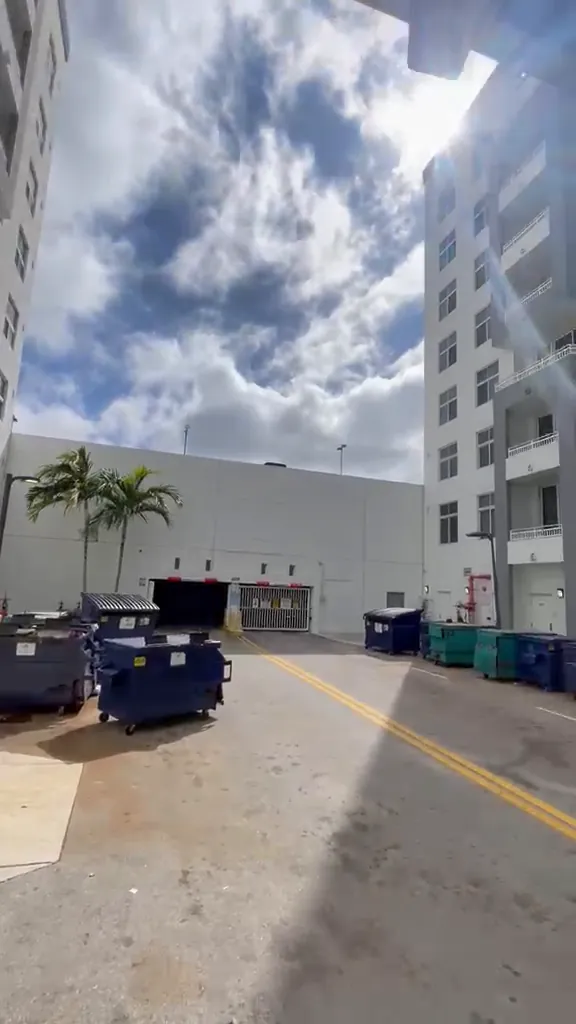
- Check there's room for a box truck to reach your unit (or which door or elevator to use for an indoor unit)
- Bring your own lock, and the key or combination
- Load the truck so the unit's back-wall items come off first
- At the unit: floor covering down, back wall first, aisle as you go
- Take a photo of the loaded unit before you lock it
Moving out of storage is the same in reverse, with one extra step: open the unit and check for moisture or pests before anything goes into the truck, so a problem in the unit doesn't travel to your new home. We move customers into and out of storage units across Miami-Dade, Broward and Palm Beach, often straight to or from the house as part of a local move, or with our loading crew if you already have the truck. Need a crew for it? See our storage unit moves.
Storage unit checklist
Tick the boxes as you go (or print this page).
Before you rent
- Ask what the climate control covers and how the facility handles storms
- Read the rental agreement's prohibited items and insurance terms
- Ask your insurer whether stored items are covered
Packing
- Lidded plastic totes for anything staying long
- Everything clean and completely dry
- Nothing perishable, flammable or irreplaceable
- Labels on two sides and a list on your phone
Loading
- Pallets or a plastic sheet on the floor
- Heavy and tall at the back, gap from the walls
- Aisle down the middle, frequent-use items by the door
- Photo of the unit, then lock it
Questions people ask
Do I need a climate-controlled storage unit in South Florida?
For wood furniture, mattresses, electronics, photos and papers, it's worth considering. What "climate controlled" covers varies by facility (some control temperature only, some humidity too), so ask before you rent.
Are plastic totes really better than cardboard boxes?
For long stays, yes. Lidded totes stack straight, hold up in humid air, survive a wet floor and are harder for pests to get into. Cardboard is fine for short stays in a dry unit, using new, strong boxes.
Is it safe to keep things in storage during hurricane season?
Many people do. Keep everything off the floor and in totes, don't store anything you can't replace, ask the facility how it handles storms, and check with your insurer what's covered for items in storage.
Can you move my things from a storage unit straight to my new home?
Yes. We move customers into and out of storage units across Miami-Dade, Broward and Palm Beach, and can go straight from the unit to your new home.
Can you take away the things I decide not to keep?
Yes. Our junk removal service hauls away furniture and items you don't want to keep, so you're not paying rent to store them.
Moving into or out of storage?
Tell us where the unit is, how big it is and where everything is going, and we'll quote the crew and the truck.